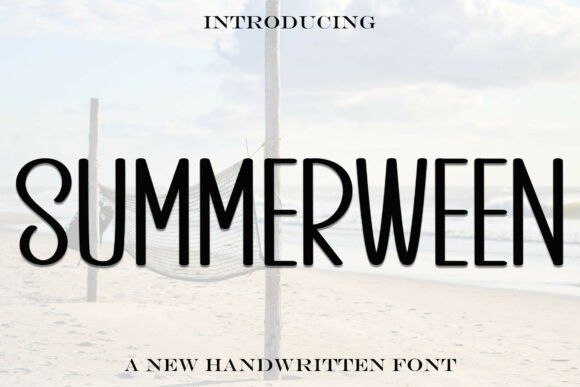
Summerween: A Practical Guide to Integrating a Laid-Back Display Font into Your Design Workflow
When it comes to choosing the right typeface for a design project, clarity and personality often walk a fine line. Summerween, a neat and casual display font, strikes that balance beautifully. With its clean lines and approachable letterforms, it offers a modern yet relaxed aesthetic that works well across branding, packaging, posters, and digital media. But how does one actually incorporate Summerween into a real-world creative or business workflow?
Understanding Summerween in the Context of Design Projects
Summerween is more than just a font — it’s a design choice that communicates tone. It belongs to the category of display fonts, which are typically used for headlines or short blocks of text rather than long-form content. This makes it ideal for situations where you want to convey a friendly, modern, and slightly playful message without sacrificing readability.
In a broader design process, Summerween often comes into play during the visual identity phase. Whether you're building a brand from scratch or refreshing an existing one, typography is a key decision point. Summerween fits well in projects that aim to feel approachable yet polished, such as boutique packaging, event posters, lifestyle branding, or social media assets.
How Summerween Fits Into Different Stages of a Project
Typography doesn’t exist in a vacuum — it interacts with every other design element. Here's how Summerween can be integrated at various stages of your creative or business process:
Before You Begin: Planning and Moodboarding
Start by considering the tone and audience of your project. Summerween works best when the goal is to evoke a sense of casual sophistication. Before diving into design software, include Summerween in your moodboards or style tiles to see how it pairs with color palettes, imagery, and other typographic elements.
- Tip: Use Summerween in sample mockups to test its visual weight and legibility across different formats.
- Tool Integration: Many design platforms like Figma, Adobe XD, and Canva support Summerween via Adobe Fonts or Google Fonts, making early testing straightforward.
Drafting and Prototyping
Once you've decided on a direction, begin incorporating Summerween into actual design files. Use it for headlines, subheadings, or call-to-action buttons where a friendly yet clear tone is needed. Its balanced structure makes it versatile enough to pair with both serif and sans-serif body fonts.
Consider using Summerween in:
- Mobile app splash screens
- Instagram story templates
- Merchandise packaging designs
- Event landing pages
During Feedback and Iteration
When sharing drafts with stakeholders or clients, Summerween’s legibility and modern look can help reduce cognitive load. It reads well at a glance, which is important when presenting concepts quickly. If feedback suggests a need for more warmth or playfulness, Summerween can often be the solution rather than a complete redesign.
After Launch: Consistency and Long-Term Use
One of the most important aspects of typography is consistency. Once you've established Summerween as part of your brand or project identity, it should be documented in your style guide. This ensures that future assets — whether digital or print — maintain visual harmony.
Pro Tip: Save reusable templates in tools like Figma or Photoshop with Summerween already applied to headline layers. This saves time and ensures typographic consistency across campaigns.
Pairing Summerween with Other Tools and Resources
Summerween doesn’t work in isolation. It interacts with a range of tools, platforms, and design elements. Here’s how to make the most of it in a practical workflow:
Design Software Compatibility
Summerween is available through major font libraries and integrates smoothly with:
- Adobe Creative Cloud (Photoshop, Illustrator, InDesign)
- Figma and Sketch
- Canva and Framer for web and UI design
Make sure your team has access to the font or that it's embedded correctly when exporting files. If you're designing for print, always check with your printer to confirm font compatibility and embedding permissions.
Web and Digital Use
If you're using Summerween on a website, it's important to optimize for performance. Since it's a display font, it’s best used sparingly — for headers or key UI elements. Hosting it via Adobe Fonts or self-hosting via a service like Fontsource can help reduce load times.
Best Practice: Use Summerween in combination with system fonts or lightweight sans-serif fonts like Inter or Open Sans for body text to maintain readability and performance.
Print and Packaging
For physical products, Summerween’s clarity ensures that text remains legible even at smaller sizes. When printing, always do a proof run — especially if you're using the font in a smaller point size or on textured materials.
Practical Implementation Tips for Designers and Creators
Whether you're a freelancer, in-house designer, or small business owner, here are some real-world tips for integrating Summerween effectively:
- Use it for brand accents: Don’t overuse Summerween in long paragraphs. Save it for headlines, pull quotes, and branding elements like logo sublines.
- Test at multiple sizes: Display fonts can lose legibility when scaled down. Always check how Summerween appears on mobile devices or printed materials.
- Pair with contrasting fonts: For visual interest and hierarchy, pair Summerween with a more structured font. A good combination might be Summerween for headlines and Roboto or Lato for body text.
- Build reusable assets: Create branded templates (social media posts, email headers, etc.) with Summerween already applied to streamline future content creation.
When and Why to Choose Summerween Over Other Fonts
Summerween stands out for its ability to blend modern design with a casual tone. Compared to other display fonts, it avoids being overly stylized, which can sometimes compromise readability. It’s particularly effective when:
- You're targeting a younger or lifestyle-oriented audience
- Your brand voice is friendly and approachable
- You need a headline font that’s both distinctive and legible
It’s also a good alternative to fonts that lean too far into either formality (like serif-based typefaces) or whimsy (like handwriting or brush scripts). Summerween strikes a middle ground that’s versatile enough for both digital and print applications.
Final Thoughts: Making Summerween Part of Your Design Toolkit
Choosing the right font is more than a stylistic decision — it's a strategic one. Summerween offers a clean, modern, and friendly option that can elevate your design without complicating the message. Whether you're working on a branding project, marketing material, or personal creative endeavor, integrating Summerween can help you maintain clarity while adding a touch of personality.
By understanding where and how to use it within your workflow — from planning to execution to long-term maintenance — you can ensure that Summerween enhances your visual communication without becoming a bottleneck. Like any tool, it’s most effective when used thoughtfully and consistently.