Monocrome: A Clean, Casual Display Font for Modern Design Projects
When it comes to choosing the right typeface for a design project, the balance between style and readability is crucial. Monocrome stands out as a display font that achieves this balance with ease. Designed to be both neat and casual, Monocrome brings clarity and a relaxed energy to any visual layout. It’s not just another font in a crowded market—it’s a thoughtful choice for designers looking to communicate modernity without sacrificing approachability.
Understanding Monocrome’s Design Philosophy
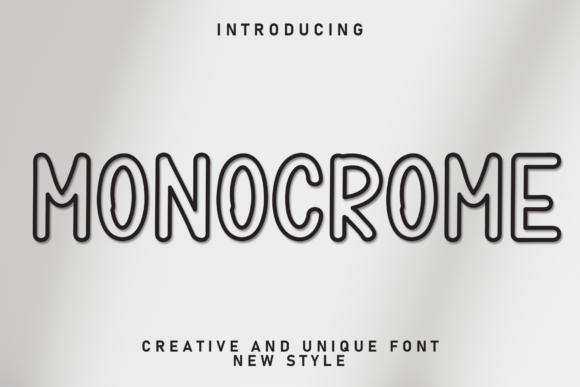
Monocrome’s design is rooted in simplicity and functionality. At first glance, its clean lines and open letterforms suggest a minimalist aesthetic, but the font retains a distinct personality. The rounded edges and slightly softened corners give it a friendly tone, while its structured proportions ensure legibility even at larger sizes. This combination makes Monocrome ideal for use in headlines, branding, and packaging—where visual impact and readability must coexist.
Unlike many display fonts that lean heavily into stylization at the expense of clarity, Monocrome maintains a balanced structure. It doesn’t demand attention through exaggerated features. Instead, it earns it through consistency and subtle charm. This makes it a versatile choice for designers who want to convey professionalism without formality.
Key Characteristics That Set Monocrome Apart
- Clean and Readable: Monocrome avoids unnecessary embellishments, focusing instead on legibility and clarity, especially at a distance.
- Approachable Aesthetic: Its slightly rounded shapes and open spacing give the font a warm, human feel.
- Playful Yet Professional: While it carries a casual tone, Monocrome remains appropriate for professional settings due to its structured design.
- Well-Spaced Forms: The font’s spacing is carefully considered, contributing to its overall readability and visual harmony.
Practical Applications and Use Cases
Monocrome shines in environments where visual communication needs to be both clear and engaging. It’s especially effective in branding and packaging design, where a modern yet friendly tone is often desired. For example, a boutique coffee shop might use Monocrome on product labels or signage to convey a sense of quality without feeling overly formal.
In digital contexts, Monocrome works well for website headers, promotional banners, and social media graphics. Its legibility ensures that messages remain clear even on mobile screens. Print designers will find it useful for posters, flyers, and editorial layouts where a clean, contemporary look is needed without the rigidity of traditional sans-serif fonts.
Who Benefits Most from Using Monocrome?
Monocrome is particularly well-suited for professionals in creative fields who need a reliable display font that performs well across media. This includes:
- Graphic designers working on branding or packaging projects.
- Web developers and UI designers looking for readable, stylish headlines.
- Entrepreneurs and small business owners crafting visual identities.
- Content creators designing promotional materials or social media assets.
It’s also a strong choice for educators and publishers who want to maintain a modern aesthetic without compromising clarity in printed or digital materials.
Performance in Real-World Design Scenarios
Monocrome’s effectiveness becomes evident when used in practical design workflows. Its consistent weight and spacing make it easy to pair with other fonts, especially clean sans-serif or serif typefaces for body text. In branding applications, it helps establish a tone that feels modern and accessible—ideal for businesses targeting younger audiences or those aiming for a relaxed, lifestyle-oriented image.
From a usability standpoint, Monocrome holds up well in both high-contrast and minimalistic layouts. It’s particularly effective when used sparingly, such as in headlines or call-out text, where its personality can shine without overwhelming the overall design.
Flexibility and Consistency Across Projects
One of Monocrome’s strengths is its adaptability. Whether used in a sleek digital interface or a printed poster, the font maintains its visual integrity. Its character set is well-designed, offering consistent spacing and alignment that contribute to a polished look. Designers will appreciate that it doesn’t require excessive tweaking to fit within a layout.
That said, Monocrome is best used as a display font rather than for extended body copy. While it’s readable, its design intent is more visual impact than long-form text. This isn’t a limitation, but rather a consideration when planning a project’s typographic hierarchy.
Professional Observations and Recommendations
For professionals evaluating Monocrome, it’s important to consider how it aligns with the project’s tone and audience. In branding projects where a modern, personable voice is desired, Monocrome can be a valuable asset. It’s particularly effective when combined with more neutral secondary fonts to create contrast and visual interest.
Designers working on multi-platform branding should test Monocrome across digital and print formats to ensure consistent appearance. While it renders well on screen, it’s always wise to preview how it looks in print, especially at smaller sizes where its subtle curves may not be as pronounced.
Potential Limitations to Consider
No font is universally perfect, and Monocrome is no exception. While it excels in casual and modern design contexts, it may not be the best choice for formal or traditional industries such as law, finance, or academia. Its relaxed tone may not convey the level of authority or seriousness required in those fields.
Additionally, while Monocrome offers a clean aesthetic, designers should be cautious about overusing it within a single layout. Like any display font, it works best when strategically placed to highlight key elements rather than filling large blocks of text.
Final Thoughts: Is Monocrome Right for Your Project?
If you're seeking a display font that balances clarity with character, Monocrome is worth serious consideration. It offers a modern, approachable look without sacrificing readability or professionalism. Whether you're designing a brand identity, a product package, or a digital campaign, Monocrome delivers a versatile and visually appealing solution.
Ultimately, the success of any font lies in how well it supports the message and audience. Monocrome does this by blending structure with personality, making it a reliable choice for designers who want to communicate modernity with warmth and clarity.