Jraot Regular: A Strategic Typography Choice for Bold Visual Communication
Typography plays a crucial role in shaping how messages are received, interpreted, and remembered. In a landscape where visual identity can make or break a brand’s impact, selecting the right font is more than an aesthetic decision—it’s a strategic move. Jraot Regular stands out as a compelling option for those looking to inject energy, depth, and urban authenticity into their design work. With its dynamic 3D layered structure and graffiti-inspired edge, Jraot Regular offers a unique visual language that resonates with audiences seeking authenticity and boldness.
Understanding Jraot Regular: More Than Just a Font
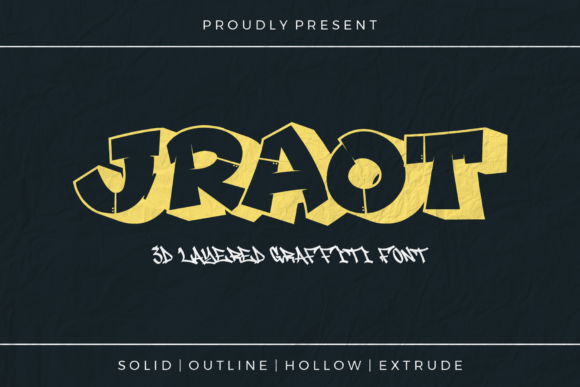
Jraot Regular is part of the broader Jraot typeface family, which includes four distinct styles: Solid, Outline, Hollow, and Extrude. Each variant offers a different visual texture and depth, allowing designers to tailor their message to the context while maintaining a consistent typographic identity. The font’s roots in classic street art and urban tagging culture give it a rebellious, raw aesthetic that can elevate everything from brand identities to event posters.
What sets Jraot Regular apart is its layered dimensionality. Unlike flat or standard sans-serif fonts, Jraot’s 3D construction adds visual weight and presence. This makes it especially effective in environments where attention is limited and impact is essential—such as digital banners, print ads, or apparel branding.
Strategic Applications: When and Why to Use Jraot Regular
Using Jraot Regular should be a deliberate choice, not a random stylistic impulse. Its visual strength makes it ideal for projects where the goal is to command attention and communicate a bold, confident message. Consider the following use cases:
- Brand Identity: For brands that want to convey a sense of rebellion, youthfulness, or urban authenticity, Jraot Regular can serve as a defining typographic element.
- Event and Music Posters: The font’s energetic structure makes it perfect for promoting concerts, festivals, or underground events where visual impact is key.
- Apparel and Merchandise: Streetwear, skate brands, and lifestyle labels can benefit from the font’s graffiti-inspired aesthetic to create a strong visual hook on t-shirts, hoodies, and accessories.
- Album Covers and Digital Art: Jraot Regular adds a dimensional, artistic quality that enhances album artwork and digital illustrations.
However, it’s important to align the font’s character with the brand or message. While its boldness is an asset in the right context, it may not suit formal or minimalist projects. The key is to match the font’s personality with the tone and objectives of the design.
Planning Your Use: Aligning Typography with Goals
Before incorporating Jraot Regular into a design project, take time to assess how it aligns with your strategic goals. Ask yourself:
- What is the primary message or emotion I want to convey?
- Who is the target audience, and will this font resonate with them?
- Is the font being used for headlines, subheadings, or body text?
- How does it interact with other design elements like color, imagery, and layout?
Because of its visual intensity, Jraot Regular works best in headline or display settings. Using it for body copy can compromise readability and dilute its impact. Instead, pair it with clean, legible fonts that provide contrast and balance.
Maximizing Creativity and Brand Consistency
One of the strengths of Jraot Regular is its flexibility across its four styles. Designers can experiment with combinations of Solid, Outline, Hollow, and Extrude to create layered compositions that add visual interest without overwhelming the viewer. This versatility allows for creative expression while maintaining typographic consistency.
For example, a brand launching a new line of urban-inspired sneakers might use the Solid style for a bold logo, the Outline version for promotional banners, and Hollow for packaging accents. This approach reinforces brand recognition while showcasing the font’s adaptability.
Avoiding Common Pitfalls: Use with Intention
While Jraot Regular can elevate a design, it can also become a liability if used without strategic intent. Overuse, mismatched context, or poor pairing with other design elements can lead to visual noise rather than clarity. Here are a few risks to avoid:
- Misalignment with brand tone: If your brand is formal, professional, or minimalist, Jraot Regular may send conflicting signals.
- Overloading layouts: Using multiple Jraot styles without a clear visual hierarchy can confuse the viewer.
- Readability issues: Using the font in small sizes or in complex color schemes can make text hard to read.
Instead, use Jraot Regular as a highlight rather than a default. Let it serve as the visual anchor of your design, not the background noise.
Long-Term Value: Typography That Supports Brand Evolution
Typography is not just a short-term design decision—it’s a long-term brand asset. Fonts like Jraot Regular, when used thoughtfully, can contribute to a brand’s visual identity over time. As markets evolve and design trends shift, having a strong typographic foundation allows brands to adapt while maintaining recognition.
Consider how streetwear brands have leveraged graffiti-inspired fonts to maintain relevance and cultural connection over decades. By anchoring their visual identity in bold, expressive typography, they create a visual legacy that resonates across generations.
Conclusion: Making the Right Typography Work for You
Jraot Regular is more than a decorative font—it’s a strategic tool for designers and brands looking to make a strong visual statement. Its layered depth, graffiti-inspired energy, and flexible variations offer creative possibilities that go beyond aesthetics. When used intentionally, it supports branding, enhances communication, and contributes to long-term visual consistency.
As with any design choice, the power of Jraot Regular lies not in its appearance alone, but in how it serves the broader goals of the project. Whether you’re building a brand identity, designing promotional materials, or creating digital content, consider how this font can amplify your message—and when it might be better to choose a different path.